
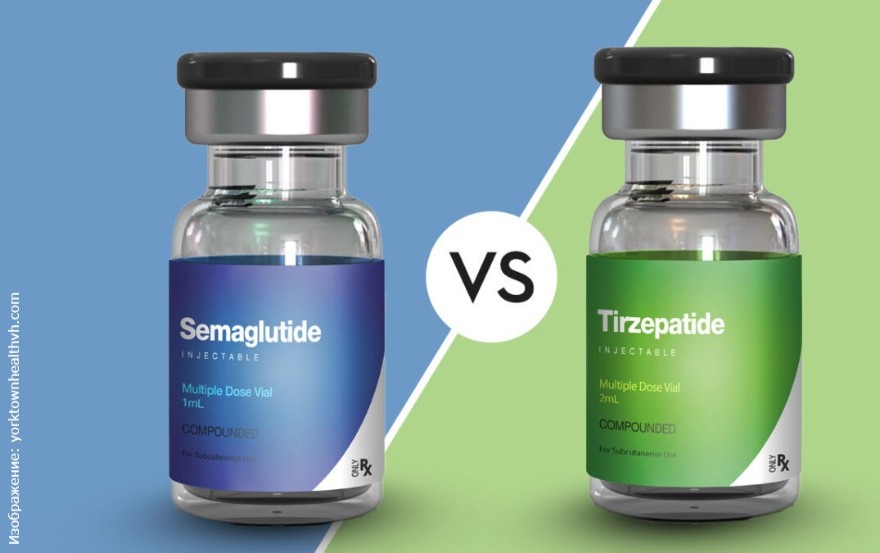
Choosing Between Tirzepatide and Semaglutide
Tirzepatide vs. semaglutide: tirzepatide drives more weight loss (~20% vs ~15%), but semaglutide has the longer track record — and in 2026 there's now a third oral option. Here's how to choose.
Short answer: tirzepatide (Zepbound, Mounjaro) tends to produce more weight loss than semaglutide (Wegovy, Ozempic) — roughly 20% vs. 15% in trials — but semaglutide has a longer safety record and is often easier to get covered. In 2026 there’s also a third path: new oral GLP-1 pills. The best choice depends on your health profile, insurance, side-effect tolerance, and goals, which is why this is a decision to make with a provider rather than alone.
If you’re weighing these two medications, this guide breaks down how they differ, what the research shows, what they cost in 2026, and how to start weight loss treatment safely. For the broader basics on this drug class, see our GLP-1 starter guide.
How do tirzepatide and semaglutide work differently?
Both medications mimic hormones your body makes to regulate appetite and blood sugar — but tirzepatide targets one more pathway.
- Semaglutide targets GLP-1 receptors, which control appetite and blood sugar. It essentially signals your brain that you’re full, so you eat less.
- Tirzepatide is a dual agonist — it hits both GLP-1 and GIP receptors. That extra target appears to give it an edge for both weight loss and blood sugar control.
A useful way to picture it: semaglutide plays one instrument very well; tirzepatide conducts a small orchestra. Both work — one simply has more tools.
Which one causes more weight loss?
The research consistently favors tirzepatide on raw effectiveness. In a head-to-head comparison, tirzepatide users lost an average of about 20% of body weight over 72 weeks, versus roughly 15% with semaglutide (source: NEJM).
That gap matters in real terms. Someone starting at 250 pounds could lose an additional 12–15 pounds with tirzepatide compared to semaglutide. People on tirzepatide were also more likely to hit ambitious milestones like 15%+ weight loss.
That said, “more effective on average” doesn’t automatically mean “right for you.” Semaglutide has a longer real-world track record, a wider set of approved uses, and is frequently easier to get covered — all of which can matter more than a few percentage points.
What about the new oral GLP-1 options in 2026?
This is the biggest update since this comparison was first written. The choice is no longer just injection vs. injection. Two oral options arrived in 2026:
- The Wegovy oral pill (oral semaglutide) launched in January 2026.
- Foundayo (orforglipron), a new oral GLP-1, received FDA approval on April 1, 2026.
Oral options matter for people who’d rather avoid weekly injections entirely. They give you and your provider a third lane to consider alongside injectable tirzepatide and semaglutide.
| Option | Receptor target | Form | Typical weight loss |
|---|---|---|---|
| Semaglutide (Wegovy, Ozempic) | GLP-1 | Weekly injection | ~15% |
| Tirzepatide (Zepbound, Mounjaro) | GLP-1 + GIP | Weekly injection | ~20% |
| Wegovy oral pill | GLP-1 | Daily pill | Varies |
| Foundayo (orforglipron) | GLP-1 | Daily pill | Varies |
What side effects should I expect?
Both medications most commonly cause gastrointestinal side effects, because they slow how quickly your stomach empties: nausea, occasional vomiting, diarrhea, and general stomach discomfort. These are usually most noticeable when starting or increasing the dose, and tend to ease over time.
Some research suggests tirzepatide users may experience fewer severe GI side effects than expected given its dual mechanism, but responses are highly individual. The rarer, more serious risks — pancreatitis and thyroid tumors — apply to both. If you have a personal or family history of medullary thyroid cancer, MEN 2, or pancreatitis, raise it with your provider before starting either drug.
How much do tirzepatide and semaglutide cost in 2026?
Cost and coverage have shifted meaningfully, and some older guidance is now wrong.
- Cash price: Without insurance, brand semaglutide typically runs roughly $900–$1,500/month and tirzepatide is in a similar-to-slightly-higher range.
- TrumpRx brand pricing launched around November 2025 at roughly $245/month for certain brand products — far below historic cash prices.
- Medicare: Contrary to the old “Medicare doesn’t cover weight loss drugs” rule of thumb, a Medicare GLP-1 Bridge pilot begins July 1, 2026 with a $50 monthly copay for eligible enrollees.
- Commercial insurance still varies: coverage is common for type 2 diabetes, less consistent for weight loss alone.
What about compounded versions? During the shortage they were a cheap workaround, but that era is ending — the FDA declared the shortages resolved and moved to restrict compounding in 2026. For most people, an FDA-approved brand or oral option is now the safer path. We cover the specifics in Is Compounded Semaglutide Still Legal in 2026?
How do I decide which one is right for me?
The honest bottom line: tirzepatide has a slight edge in clinical effectiveness, semaglutide has a longer track record and often better coverage, and oral pills now offer a needle-free alternative. Your health history, budget, insurance, and tolerance for side effects should drive the decision more than any general ranking.
This is exactly the kind of call a provider helps with. Through a telehealth consultation, a licensed clinician can evaluate your candidacy, weigh the benefits and risks for your situation, navigate coverage, and build a plan — including switching medications later if your coverage or response changes. These medications also work best alongside nutrition and activity changes; they make healthy habits more sustainable by reducing the constant hunger that derails so many attempts.
Frequently Asked Questions
Which medication causes more weight loss, tirzepatide or semaglutide?
Tirzepatide typically produces greater weight loss. In a head-to-head trial, tirzepatide users lost about 20% of body weight versus roughly 15% with semaglutide over 72 weeks. Individual results vary with diet, activity, and overall health.
Is there an oral version now instead of injections?
Yes. The Wegovy oral pill (oral semaglutide) launched in January 2026, and Foundayo (orforglipron), a new oral GLP-1, was FDA-approved on April 1, 2026. These give people a needle-free option to discuss with their provider.
Does insurance or Medicare cover these in 2026?
Commercial coverage is common for type 2 diabetes and less consistent for weight loss alone. Notably, a Medicare GLP-1 Bridge pilot begins July 1, 2026 with a $50 monthly copay for eligible enrollees — a change from the old rule that Medicare never covered weight loss drugs. Confirm specifics with your plan.
How much do they cost without insurance?
Brand semaglutide typically runs about $900–$1,500/month and tirzepatide similar or slightly higher. Programs like TrumpRx brand pricing (around $245/month for certain products, launched November 2025) have narrowed the gap considerably.
Can I switch from semaglutide to tirzepatide or vice versa?
Yes, under medical supervision. A provider adjusts dosing to minimize side effects during the transition. People switch for coverage changes, side-effect profiles, or different effectiveness.
Can I get these medications through telehealth?
Yes. Licensed providers can evaluate your eligibility, prescribe an appropriate medication, and monitor your progress through virtual visits — with a real medical intake, not a checkout cart.
Are there conditions that would disqualify me?
A personal or family history of medullary thyroid cancer, MEN 2, a history of pancreatitis, or severe GI disease may rule these out or require caution. A thorough medical evaluation determines your candidacy.
Start your evaluation with a licensed provider
Both tirzepatide and semaglutide are highly effective, and in 2026 you also have oral options and better pricing than this comparison originally described. The right next step is a conversation with a licensed clinician who can match the medication — and the form — to your health and goals.
Ready to begin? Start an online weight-loss consultation with Omnia Telehealth and let a licensed provider help you choose and start safely.
This article is for general educational purposes and is not medical advice. Always consult a licensed healthcare provider about your individual situation. Individual results and eligibility vary.