
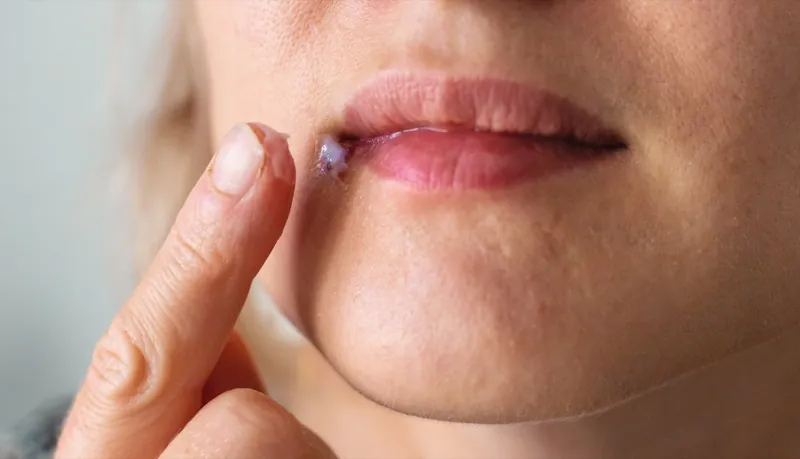
Cold Sore Treatment Online: How to Get Valacyclovir Prescribed Before Your Outbreak Peaks
Yes — a licensed telehealth provider can prescribe valacyclovir or acyclovir for cold sores after a virtual visit, often within hours. The critical window is narrow: antiviral therapy works best when started during the prodrome stage (the tingling, itching, or burning that precedes a visible blister), and once a full blister has formed, treatment has limited benefit. With roughly half of U.S. adults carrying HSV-1, the virus that causes cold sores, knowing how to get treatment quickly can cut the duration of an outbreak by a day or more.
Can I get valacyclovir prescribed online for a cold sore?
Yes. A telehealth provider can prescribe valacyclovir, acyclovir, or famciclovir for cold sores after reviewing your symptom history and medical background. No in-person exam or throat swab is required for a recognized, recurrent cold sore — the clinical presentation (tingling at the lip border, then a cluster of blisters) is distinct enough that a visual or symptom-based evaluation is accepted practice.
The FDA-approved dosing for valacyclovir to treat a cold sore (herpes labialis) in immunocompetent adults is 2 grams taken twice, 12 hours apart, for a single day. That is the entire course — one day, two doses. Efficacy has only been established when therapy is initiated at the earliest sign of a prodrome (tingling, itching, or burning sensation) or at the first appearance of a lesion. The FDA label explicitly states that starting treatment after a blister or ulcer has fully formed has not been shown to be effective, so acting before that window closes matters.
For patients who have frequent outbreaks — generally defined as six or more per year — a provider can discuss suppressive therapy: a lower daily dose of valacyclovir designed to reduce outbreak frequency. Suppressive use for oral HSV-1 cold sores is considered off-label (the labeled indication covers genital herpes suppression), but it is widely used in clinical practice based on the same mechanism of action.
Who gets cold sores, and why are they more common in fall and winter?
The Centers for Disease Control and Prevention estimates that approximately 48% of U.S. adults aged 14–49 carry HSV-1, most of whom acquired it in childhood. The majority never develop symptoms; for those who do, outbreaks recur at unpredictable intervals, often triggered by specific factors.
Cold weather and fall-to-winter transitions are among the most reliable triggers because:
- Low humidity dries lip skin, reducing the barrier that keeps HSV-1 dormant at the nerve ganglion.
- Illness and immune dips from cold and flu season reactivate latent HSV.
- Holiday stress (a well-documented immunosuppressant) raises cortisol and lowers natural killer cell activity.
- Reduced sun exposure alters immune regulation; paradoxically, peak sun (summer UV exposure on lips) can also trigger outbreaks, so both extremes are risk factors.
Recognizing your personal triggers — and having antiviral medication ready or a telehealth visit available — is the most practical way to cut both outbreak frequency and duration.
What is the difference between valacyclovir, acyclovir, and famciclovir for cold sores?
All three drugs work by inhibiting HSV DNA polymerase, stopping the virus from replicating. The practical differences are dosing convenience, cost, and availability.
| Medication | Typical episodic dose (cold sore) | Doses per day | Generic available | Approximate retail (GoodRx, 2026) |
|---|---|---|---|---|
| Valacyclovir (Valtrex) | 2 g × 2 doses, 12 h apart | 2 (one day total) | Yes | $14–$30 for two 2 g tablets |
| Acyclovir (Zovirax) | 400 mg × 5 doses/day × 5 days | 5 | Yes | $20–$45 for a 5-day course |
| Famciclovir (Famvir) | 1,500 mg single dose | 1 (one-day single dose) | Yes | $30–$60 |
| Acyclovir 5% cream (topical) | Applied 5× daily × 4 days | 5 (topical only) | Yes | $10–$20 OTC |
Valacyclovir is the most commonly prescribed option because its one-day, two-dose regimen is easy to complete fully. Famciclovir’s single-dose option is similarly convenient. Topical acyclovir cream is available over the counter and can modestly reduce healing time, but most evidence supports the oral antivirals as more effective at reducing outbreak duration and peak symptoms.
How fast does a telehealth cold sore visit work?
A telehealth visit for cold sores typically takes 10–15 minutes. At Omnia Telehealth, our licensed providers can evaluate your symptoms, confirm you are an appropriate candidate for antiviral therapy, and send a prescription to your pharmacy — often the same day. For recurring cold sores, a provider may also discuss suppressive therapy to reduce how often outbreaks happen.
You can visit us at Omnia TeleHealth for cold sore and herpes treatment to start the process from home.
What symptoms should prompt me to seek in-person or emergency care instead?
Telehealth is appropriate for typical, recurrent cold sores in otherwise healthy adults. Some presentations require in-person evaluation:
- Ocular symptoms: Pain, redness, light sensitivity, or blurry vision alongside a cold sore may indicate herpes keratitis, a potentially serious eye infection requiring ophthalmology evaluation.
- Eczema herpeticum: Widespread blistering in someone with eczema or atopic dermatitis can represent a dangerous systemic infection; seek emergency care.
- Severe immunosuppression: Active cancer treatment, organ transplant, or CD4 count below 100 cells/mm³ warrant in-person management.
- Neonatal exposure: Anyone with an active cold sore who has had close contact with a newborn should alert the infant’s pediatrician immediately.
- First-ever outbreak with severe symptoms: An unusually severe or widespread first episode, especially with fever, neck stiffness, or neurological symptoms, warrants urgent evaluation.
For standard recurrent cold sores in healthy adults — the vast majority of cases — a telehealth visit is clinically appropriate and far faster than waiting for an in-person appointment when the treatment window is measured in hours.
Can telehealth prescribe daily valacyclovir to prevent cold sores?
Yes, though there is a nuance worth understanding. Daily suppressive therapy with valacyclovir at doses of 500 mg to 1 g once daily is an FDA-approved, labeled indication for recurrent genital herpes. For oral cold sores specifically, suppressive therapy is used off-label — meaning providers prescribe it based on the same clinical evidence and mechanism, but the FDA labeling does not explicitly cover that use.
In clinical practice, the distinction rarely affects prescribing decisions for patients with frequent outbreaks. If you are having six or more cold sore episodes per year, a provider can discuss whether the evidence supports suppressive therapy for you, the potential benefits (reduced frequency, possibly reduced transmission risk), and monitoring considerations. Mention outbreak frequency during your visit.
Will insurance cover valacyclovir for cold sores?
Generic valacyclovir is inexpensive enough that many patients pay out of pocket, especially with discount programs. At pharmacies using GoodRx or similar platforms, the two-dose episodic course can cost as little as $14–$30 without insurance. Brand-name Valtrex is significantly more expensive; the generic is clinically identical.
If you have insurance, valacyclovir is typically covered under most commercial plans and Medicare Part D formularies, usually at a Tier 1 or Tier 2 copay. Confirm your specific formulary and copay before filling, as coverage varies by plan.
How do I know my cold sore is in the prodrome stage?
The prodrome typically lasts 6–48 hours before a blister appears. Signs include:
- Tingling or burning at a specific spot on or around the lip
- Itching at the same location, sometimes with mild redness
- Tightness or unusual sensitivity in that area
If you have had cold sores before, the prodrome sensation is usually recognizable. The moment you feel it — not after the blister appears — is the right time to start an antiviral or book a telehealth visit for a prescription. For patients who have standing prescriptions or suppressive therapy, treatment can begin before even contacting a provider.
Frequently Asked Questions
Can a telehealth provider diagnose a cold sore without seeing me in person? For recurrent cold sores in adults who have had them before, a telehealth provider can evaluate your symptoms and medical history without an in-person exam. Cold sore presentations are clinically distinct enough that symptom-based evaluation is standard practice. If you have never had a cold sore before or your symptoms are atypical, a provider may recommend in-person testing to confirm the diagnosis.
Is valacyclovir safe to take during pregnancy? Valacyclovir and acyclovir have been used extensively during pregnancy and are generally considered among the safer antivirals in that context, particularly for recurrent genital herpes suppression. However, decisions about antiviral use during pregnancy should be made with a provider who can weigh your individual circumstances. Tell your telehealth provider if you are or may be pregnant before they prescribe.
Can cold sores spread even when no blister is visible? Yes. HSV-1 can shed asymptomatically — meaning the virus is transmissible from skin surfaces even between outbreaks. This is called asymptomatic viral shedding. Avoiding oral contact during active outbreaks is the primary prevention measure, but it does not eliminate transmission risk entirely. Patients with high shedding rates may benefit from suppressive therapy as an additional precaution.
Will daily valacyclovir stop cold sores completely? Suppressive therapy significantly reduces outbreak frequency for most patients, but rarely eliminates outbreaks entirely. Clinical trials of genital herpes suppression show approximately 70–80% reduction in outbreak frequency. A similar effect is expected for oral HSV-1 suppression, though fewer large randomized trials have been conducted specifically for cold sores.
How is an online cold sore visit different from just buying Abreva at the pharmacy? Abreva (docosanol 10% cream) is an FDA-approved OTC topical treatment that can reduce cold sore healing time by about half a day. Oral antivirals like valacyclovir typically show greater reductions in outbreak duration and peak symptoms in comparative studies. The choice depends on outbreak severity, frequency, and personal preference. A telehealth provider can help you decide whether a prescription oral antiviral, an OTC option, or suppressive therapy is the right fit for your pattern.
If you get cold sores regularly — especially if outbreaks affect your work or quality of life — a telehealth visit can get you a prescription antiviral and a plan for managing future episodes. Schedule a visit with Omnia TeleHealth to speak with a licensed provider from home, any day of the week.