
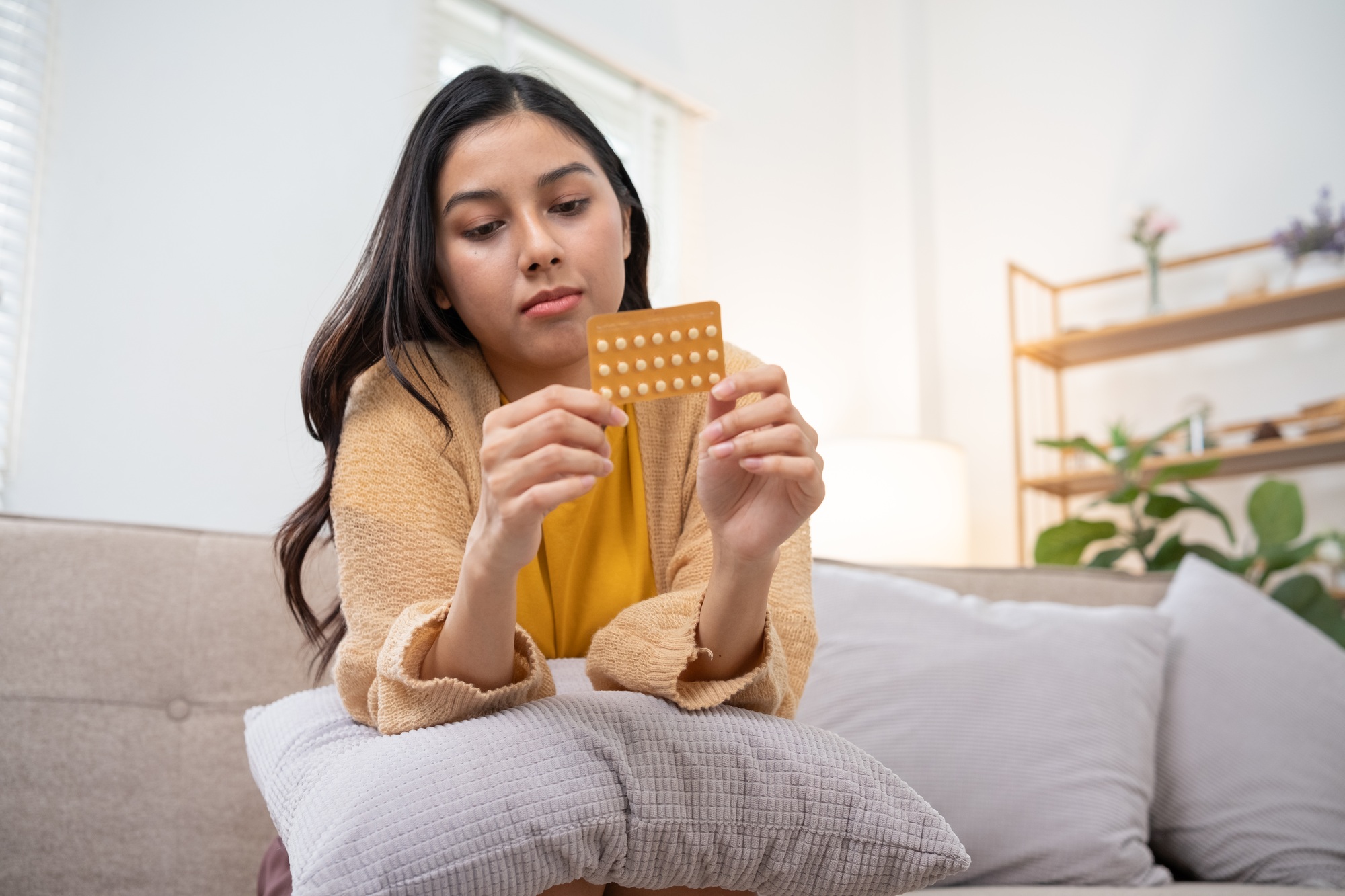
GLP-1 and Birth Control: Does Ozempic or Zepbound Make Your Pill Less Effective?
If you take a GLP-1 medication for weight loss — such as semaglutide (Ozempic or Wegovy) or tirzepatide (Zepbound or Mounjaro) — and you also rely on an oral birth control pill, there is an important difference between the two drug classes you should know about. Tirzepatide has an FDA label warning about reduced oral contraceptive absorption and requires a backup method for four weeks after starting or increasing the dose. Semaglutide, by contrast, does not appear to cause a clinically meaningful reduction in how well hormonal pills are absorbed — though nausea and vomiting on either drug can still create a missed-pill risk. A telehealth provider can review your specific medications and help you choose the right contraceptive approach.
Does tirzepatide (Zepbound or Mounjaro) affect birth control pills?
Yes — and meaningfully so. Tirzepatide is a dual GLP-1 and GIP receptor agonist, which means it slows gastric emptying (how fast food and medications leave the stomach) more aggressively than single-receptor GLP-1 drugs. Because oral hormonal contraceptives are absorbed through the digestive tract, delayed gastric emptying can reduce how much of the medication enters your bloodstream.
In the pivotal pharmacokinetic study behind the FDA label warning, a single 5 mg dose of tirzepatide reduced the maximum blood concentration (Cmax) of ethinyl estradiol — the estrogen component in most combination pills — by approximately 59%, and reduced overall exposure (AUC) by roughly 20%. Peak absorption was also pushed back from about 2.5 hours to 4.5 hours after the pill was taken.
The effect is greatest with the first dose and with each dose increase, because that is when gastric emptying is slowed the most. Eli Lilly’s prescribing information for Zepbound and Mounjaro explicitly states that patients on oral hormonal contraceptives should either switch to a non-oral method (such as an IUD, patch, implant, or ring) or use a backup barrier method (like a condom) for at least four weeks after starting tirzepatide and for four weeks after every dose escalation.
What about semaglutide (Ozempic or Wegovy)?
The picture is more reassuring here. A 2024 systematic review published in the Journal of the American Pharmacists Association examined five clinical studies of semaglutide and oral hormonal contraceptives and found no statistically or clinically significant reduction in contraceptive absorption. A 2026 review presented at an ACOG meeting reached a similar conclusion, with a lead reviewer describing the available pharmacokinetic data for semaglutide as “reassuring” and finding no support for routine changes to combined oral contraceptive use.
The FDA labels for Ozempic and Wegovy note that delayed gastric emptying may theoretically affect the absorption of orally administered medications, but they do not include the same specific contraceptive-interaction warning found on tirzepatide’s label.
The practical bottom line: if you are on semaglutide, you do not need to switch methods or add a backup method solely because of drug interaction concerns. That said, your provider should still know you are on both medications, and the caveat below about side effects still applies.
Does nausea or vomiting on GLP-1s affect my birth control?
This is the bigger practical risk for semaglutide users — and an important consideration for tirzepatide users on top of the absorption issue. Both medications commonly cause nausea, vomiting, and diarrhea, especially during the first few weeks of treatment and after each dose increase.
If you vomit within approximately three hours of taking your birth control pill, the pill may not have been fully absorbed. Standard missed-pill protocols apply in this situation:
- Combined estrogen-progestin pills: treat the vomited dose as a missed pill per your specific pill’s instructions. Most guidelines recommend using a backup method for the next seven days.
- Progestin-only pills (mini-pills): timing is critical — these pills have a much narrower three-hour window. A vomited dose may require emergency contraception if you also had unprotected sex. Consult a provider promptly.
- Ongoing severe nausea or diarrhea: if symptoms are persistent, absorption may be consistently compromised. This is a reason to consider switching to a non-oral method while you are titrating up your GLP-1 dose.
GLP-1 drug vs. birth control risk: a quick comparison
| Drug | Known effect on oral contraceptives | FDA label warning | Backup method required? |
|---|---|---|---|
| Tirzepatide (Zepbound, Mounjaro) | Reduces Cmax by ~59%, AUC by ~20% | Yes — explicit OC warning | Yes — 4 weeks after start and each dose increase |
| Semaglutide (Ozempic, Wegovy) | No clinically significant reduction found in 5 studies | No specific OC warning | No — but be alert to vomiting/diarrhea |
| Orforglipron (oral GLP-1, Foundayo) | Data limited; similar gastric-emptying effect expected | Prescribers counseling recommended | Use caution; discuss with your provider |
Which birth control methods are NOT affected by GLP-1 drugs?
If you are on tirzepatide — or if nausea has made your pill routine unreliable — non-oral contraceptive methods are unaffected by GLP-1 drugs because they do not rely on gastrointestinal absorption. Options include:
- Hormonal IUD (Mirena, Kyleena, Liletta, Skyla): highly effective, lasts 3–8 years, zero daily adherence required
- Non-hormonal copper IUD (Paragard): 99%+ effective, no hormones, good if you prefer a hormone-free option
- Implant (Nexplanon): a small rod inserted in the upper arm, effective for up to three years
- Contraceptive patch (Xulane, Twirla): weekly application, absorbed through the skin — not affected by gastric emptying
- Vaginal ring (NuvaRing, Annovera): monthly or annual ring, also absorbed locally
- Injectable (Depo-Provera): a shot every three months with no daily pills to miss
- Barrier methods: condoms are always an option as a backup or as primary contraception
A licensed telehealth provider can review your health history and help you decide which non-oral method fits your lifestyle, or confirm that your current pill is still appropriate if you are on semaglutide.
What if I want to get both GLP-1 and birth control prescriptions online?
You can. A telehealth visit for weight loss can address your GLP-1 prescription, and a separate or combined visit can cover your contraceptive needs — both without an in-person appointment. The key is making sure your provider has a complete picture of all medications you are taking. Drug interaction reviews are a routine part of a telehealth intake, and a licensed clinician can flag whether your current combination requires any change.
If you are starting tirzepatide and currently use an oral pill, consider booking a telehealth visit before your first injection to plan your contraceptive backup in advance. Waiting until side effects have started or until you have a contraceptive concern makes the logistics harder.
Visit our telehealth weight loss service to learn about GLP-1 prescriptions, or our birth control service to review your contraceptive options with a licensed provider.
Frequently Asked Questions
Can I get pregnant on Ozempic if I take birth control pills? Based on available clinical data, semaglutide (Ozempic/Wegovy) does not meaningfully reduce how well oral birth control pills are absorbed, so pregnancy risk is not increased by the drug interaction itself. The main risk is indirect: if severe nausea causes vomiting within a few hours of taking your pill, treat it as a missed dose and use a backup method for seven days.
Do I need to stop birth control when I start Zepbound? No — you do not need to stop birth control. However, if you use oral (pill) contraceptives, the FDA label for Zepbound (tirzepatide) recommends switching to a non-oral method or adding a backup barrier method for four weeks after your first dose and four weeks after each dose increase. This is a precaution, not a reason to be unprotected.
Does tirzepatide reduce the effectiveness of the birth control patch or ring? No. The patch (Xulane, Twirla) is absorbed through the skin, and the vaginal ring (NuvaRing, Annovera) is absorbed locally — neither depends on gastrointestinal absorption. GLP-1 drugs’ effect on gastric emptying does not apply to these methods.
I take a progestin-only pill (mini-pill). Does Ozempic affect it the same way? The available semaglutide studies primarily evaluated combined (estrogen-progestin) pills, so data specific to progestin-only pills is limited. Because the mini-pill has a much stricter timing window than combination pills, vomiting within three hours of taking it is a more significant concern. If nausea or vomiting is frequent, talk to your provider about switching to a more forgiving method.
Can a telehealth doctor review both my GLP-1 and birth control at the same visit? Yes. Telehealth providers routinely review your full medication list during intake. Booking a visit that covers both weight management and contraceptive needs is efficient and ensures your provider considers any interactions before prescribing. Schedule a consultation to get started.
This article is for educational purposes only and does not constitute medical advice. Contraceptive needs vary by individual. Please consult a licensed healthcare provider before making any changes to your medications.