
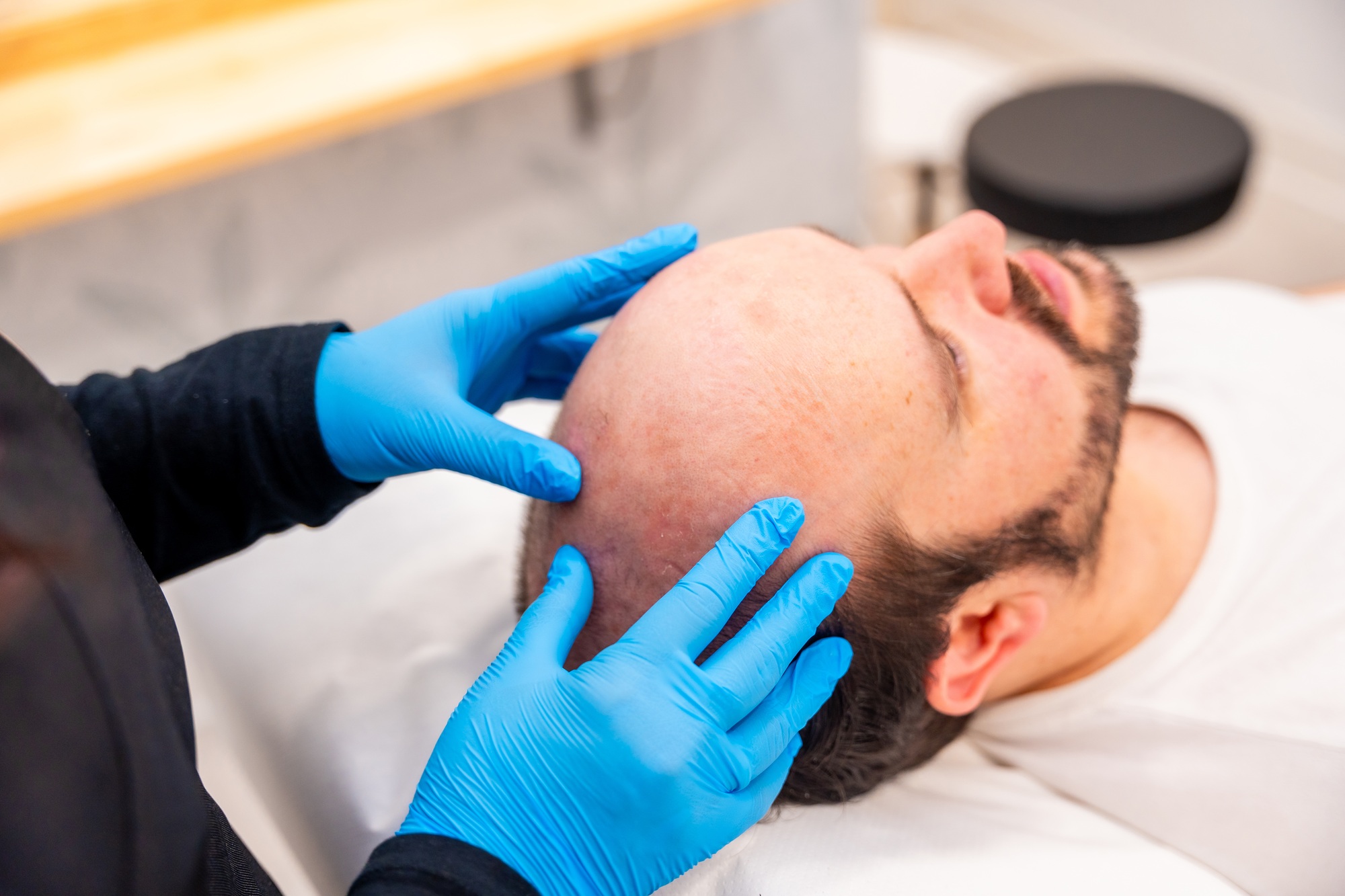
Topical vs Oral Finasteride vs Oral Minoxidil: The 2026 Hair Loss Treatment Guide
Topical finasteride, oral finasteride, and oral minoxidil are each clinically proven to slow androgenetic alopecia and stimulate regrowth — but they work through different mechanisms, carry different risk profiles, and suit different patients. In 2026, telehealth has made all three accessible by prescription without an in-office dermatology visit. Understanding which option fits your biology, lifestyle, and risk tolerance is the first step to a treatment plan that actually works.
Is topical finasteride safer than oral finasteride?
Yes, in terms of systemic exposure. Topical finasteride — typically a 0.25% or 0.5% solution or spray applied directly to the scalp — reduces scalp DHT by approximately 70% while decreasing serum (blood) DHT by only 30–35%. Oral finasteride 1 mg/day (Propecia) suppresses serum DHT by 60–70%.
That difference matters clinically. A 2025 pharmacovigilance study analyzing the FDA Adverse Event Reporting System (FAERS) found lower rates of Post-Finasteride Syndrome-like adverse events with topical versus oral administration — approximately 2.8% sexual side effects with topical versus 4.8% with oral. Maximum plasma finasteride concentrations are more than 100 times lower after topical application than after oral dosing, according to Phase III trial pharmacokinetic data published in Chinese Medical Journal (2026).
However, topical finasteride is not FDA-approved as a standalone product and is available only through licensed compounding pharmacies. In early 2026, the FDA issued a safety communication noting adverse-event reports — including erectile dysfunction, decreased libido, and symptoms persisting after discontinuation — for compounded topical formulations, underscoring the importance of prescriber oversight rather than self-administration.
Bottom line: Topical finasteride carries meaningfully lower systemic exposure than the oral pill, but it is not zero-risk, not FDA-approved, and should only be used under a clinician’s supervision.
Does topical finasteride work as well as oral?
Largely yes, based on current evidence. The Phase III randomized controlled trial published in Chinese Medical Journal (2026) found that topical finasteride spray significantly improved hair count versus placebo, with outcomes statistically comparable to oral finasteride at 12 months. A real-world 2026 retrospective study in JMIR Dermatology analyzed patient-reported outcomes from a national telehealth platform and found high satisfaction rates and low rates of treatment discontinuation among men prescribed compounded topical finasteride.
The practical caveat: topical finasteride must be applied correctly — typically once daily to a dry scalp — and consistent use for at least six months is required before meaningful regrowth becomes visible. Missing applications reduces scalp DHT suppression, and results generally plateau at 12–18 months of continuous use.
What are the side effects of oral finasteride I need to know?
Oral finasteride 1 mg/day is FDA-approved for male androgenetic alopecia and has approximately 30 years of safety data. The most-discussed concerns:
- Sexual side effects: Decreased libido, erectile dysfunction, and reduced ejaculatory volume affect roughly 3–5% of users in clinical trials. Most resolve on discontinuation, but a small minority report persistent symptoms (Post-Finasteride Syndrome), which the FDA has required to be listed in prescribing information since 2012.
- Mood changes: Depression and anxiety have been reported; the FDA updated the label in 2022 to include psychiatric risks. A 2025 disproportionality analysis of the FAERS database confirmed ongoing pharmacovigilance signals for sexual and mood adverse events.
- Women and pregnancy: Oral finasteride is contraindicated in women who are or may become pregnant; it causes feminization of male fetuses. Topical formulations carry lower fetal-exposure risk but are still generally avoided during pregnancy.
- PSA interference: Finasteride typically lowers prostate-specific antigen (PSA) by approximately 50%, which can mask early prostate cancer detection. Men should disclose finasteride use to their provider before any PSA screening.
Should I take oral minoxidil instead of the topical solution?
Oral minoxidil (typically 0.25–2.5 mg/day for women, 2.5–5 mg/day for men) has become a compelling alternative — and in many patients, a superior option — compared with twice-daily topical 2% or 5% minoxidil solution. Here is why prescribers and patients are making the switch:
Efficacy: A 2026 systematic review and meta-analysis in Journal of Pioneering Medical Sciences found that oral minoxidil produced modestly greater gains in hair density, shaft thickness, and anagen/telogen ratios compared with 5% topical in head-to-head trials. Oral dosing also bypasses the sulfotransferase enzyme variability in scalp tissue that makes roughly 40% of people poor topical-minoxidil responders.
Compliance: A single daily pill outperforms a twice-daily topical routine requiring a 4-hour application dwell time that often leaves residue and can be cosmetically inconvenient. Compliance was consistently superior in the oral group across reviewed trials.
Side effects unique to oral minoxidil:
- Hypertrichosis (unwanted body hair growth): the most common complaint, affecting approximately 15% of users; typically fine vellus hair on the forehead, cheeks, and arms appearing within 4–8 weeks. Dose-dependent — often resolves with dose reduction.
- Fluid retention: affects 1–10% of patients; can manifest as ankle or leg swelling, particularly in women. Managed with dose reduction or, in some cases, a low-dose diuretic.
- Tachycardia: modest at hair-loss doses. A 2024 Holter-monitoring study found a mean resting heart-rate increase of approximately 5 bpm at 7.5 mg; at 2.5 mg the cardiovascular effect is minimal.
- Pericardial effusion: extremely rare at low doses (0.25–5 mg) and primarily a concern at the antihypertensive doses of 10–40 mg/day historically used for blood pressure.
Patients with uncontrolled hypertension, significant cardiovascular disease, or kidney dysfunction should discuss oral minoxidil carefully with their provider before starting.
Comparison: Topical Finasteride vs. Oral Finasteride vs. Oral Minoxidil
| Feature | Topical finasteride | Oral finasteride (1 mg) | Oral minoxidil (0.25–5 mg) |
|---|---|---|---|
| FDA approval | No (compounded only) | Yes (men only) | Off-label (approved at higher doses for hypertension) |
| Mechanism | DHT suppression (5-alpha-reductase inhibition, topical) | DHT suppression (systemic) | Potassium-channel opener → increased follicular blood flow |
| Scalp DHT reduction | ~70% | ~70% | None |
| Serum DHT reduction | ~30–35% | ~60–70% | None |
| Best for | Men seeking lower systemic exposure from finasteride | Men with classic male-pattern hair loss | Men and women, including topical-minoxidil non-responders |
| Sexual side effects | ~2.8% (estimated) | ~3–5% | None (different mechanism) |
| Hypertrichosis risk | None | None | ~15% |
| Works in women | Not typically recommended; limited evidence | Contraindicated in pregnancy | Yes (lower doses; standard option) |
| Application | Once-daily scalp application | Once-daily oral pill | Once-daily oral pill |
| Visible results timeline | 6–12 months | 6–12 months | 3–6 months (often faster than topical) |
| Estimated telehealth cost | $40–80/month (compounded) | $10–30/month (generic) | $15–40/month (compounded) |
Can I combine finasteride and minoxidil?
Yes — and combination therapy is the most evidence-backed approach for moderate-to-severe androgenetic alopecia. Finasteride addresses the hormonal root cause (DHT-driven follicular miniaturization) while minoxidil prolongs the anagen growth phase through an independent mechanism. Research published in the New England Journal of Medicine found that men using both oral finasteride and topical minoxidil achieved significantly greater hair-count improvements at 12 months than either treatment alone.
Combining topical finasteride with oral minoxidil is increasingly prescribed through telehealth platforms as a strategy that controls systemic DHT at low finasteride plasma levels while delivering the proven hair-growth benefits of minoxidil in pill form. No significant pharmacokinetic interactions between the two agents have been identified in published literature.
Who should avoid finasteride or oral minoxidil?
Approach finasteride (topical or oral) with caution or avoid if you:
- Are a woman who is pregnant or may become pregnant
- Have a prior hypersensitivity reaction to finasteride or dutasteride
- Have active clinical depression or anxiety that may be worsened by hormonal modulation
- Are enrolled in prostate cancer screening and have not disclosed finasteride use to your urologist
Use caution with oral minoxidil if you:
- Have uncontrolled hypertension or a recent cardiovascular event
- Have significant renal or hepatic impairment
- Are on other vasodilators or antihypertensive medications (additive blood-pressure effects are possible)
- Are breastfeeding (data are limited; discuss with your provider)
How do I get these medications through telehealth?
A licensed telehealth provider can assess your hair-loss pattern, medical and medication history, and contraindications through a brief video visit or asynchronous photo consultation. Omnia TeleHealth’s hair-loss service provides access to compounded topical finasteride, generic oral finasteride, oral minoxidil, and combination regimens — prescriptions are sent to a licensed pharmacy and delivered directly to you.
The evaluation typically takes one to two business days. Standard follow-up occurs at three and six months so your provider can assess your response to treatment and adjust dosing if needed.
Frequently Asked Questions
Can women use topical or oral finasteride? Oral finasteride is contraindicated in women who are or may become pregnant due to the risk of male-fetus feminization. Post-menopausal women are sometimes prescribed it off-label for female-pattern hair loss, but this requires careful evaluation. Topical finasteride carries lower systemic exposure, but clinical evidence in women is limited — most guidelines recommend spironolactone or oral minoxidil as first-line options for women with androgenetic alopecia.
How long until I see results from topical finasteride or oral minoxidil? Expect three to six months before noticing a reduction in shedding and six to twelve months before measurable density improvement. Both treatments require continuous use — stopping either typically causes shedding to resume within three to six months, returning to baseline within 12 months.
Is oral minoxidil safe to take long-term? Low-dose oral minoxidil has been used safely for hypertension treatment for over 40 years at much higher doses. At the 0.25–5 mg hair-loss range, the risk profile is well tolerated by otherwise healthy individuals. Routine annual check-ins — including blood pressure and resting heart rate monitoring — are standard practice when prescribed through telehealth.
What is the difference between finasteride and dutasteride for hair loss? Dutasteride inhibits both type I and type II 5-alpha-reductase enzymes, suppressing serum DHT by up to 90% versus finasteride’s 60–70%. It is not FDA-approved for hair loss (approved only for benign prostatic hyperplasia) but is prescribed off-label, particularly for finasteride non-responders. A 2026 Phase II trial published in PMC examined topical dutasteride as an even-lower-systemic-exposure option for men who want maximal scalp DHT suppression with minimal systemic effects.
Will insurance cover topical finasteride or oral minoxidil for hair loss? Neither is typically covered by insurance when prescribed specifically for hair loss. Generic oral finasteride 5 mg (Proscar), which can be split for hair-loss dosing, is sometimes covered when prescribed for BPH. Compounded topical finasteride and low-dose oral minoxidil are generally out-of-pocket through telehealth but remain accessible — costs typically range from $15 to $80 per month depending on the formulation and pharmacy.
The right hair-loss treatment in 2026 depends on your specific pattern, your risk tolerance, and how you want to incorporate medication into your daily routine. Whether you’re drawn to the lower systemic exposure of topical finasteride, the convenience and proven compliance of oral minoxidil, or a combination strategy, a licensed telehealth provider can design a regimen tailored to you. Start a hair-loss consultation with Omnia TeleHealth to get an individualized prescription plan without leaving home.