
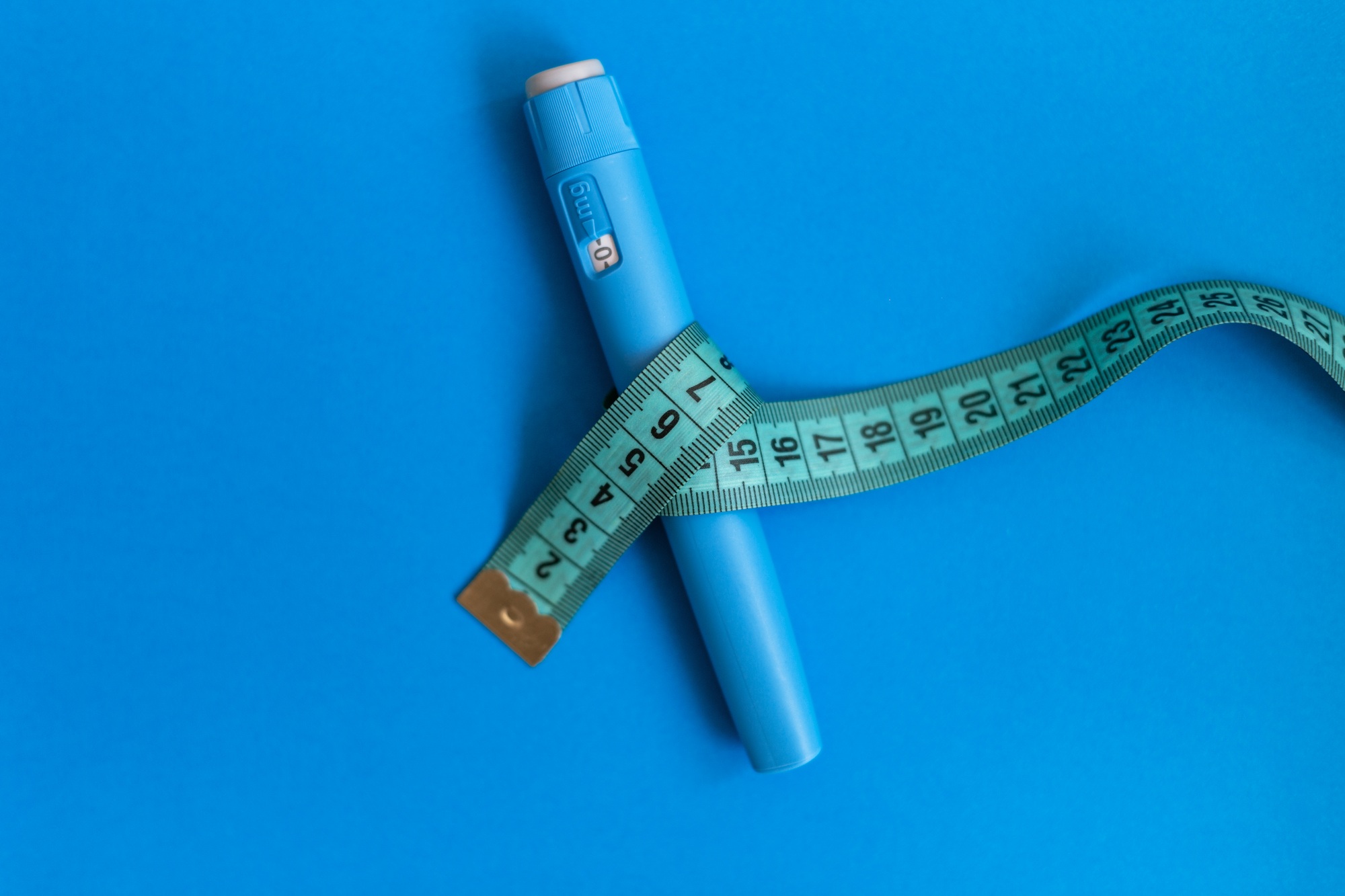
Why Your GLP-1 Stopped Working: How to Break Through a Weight Loss Plateau on Ozempic or Wegovy
A GLP-1 plateau — when weekly weight loss slows or stalls for four or more consecutive weeks — affects an estimated 30–40% of patients after 6 to 12 months on semaglutide or tirzepatide, and it almost always has a correctable cause. The most common fixes are dose escalation, switching to a dual-agonist, or addressing lifestyle factors that your body has compensated for over time. A licensed telehealth provider can review your current dose, weight trend, and health history to recommend the right next step — often within the same day you reach out.
Why Does a GLP-1 Plateau Happen?
GLP-1 receptor agonists like semaglutide (Ozempic, Wegovy) and tirzepatide (Mounjaro, Zepbound) suppress appetite by mimicking hormones your gut naturally releases after eating. Over time, two physiological mechanisms can dull that effect:
Metabolic adaptation. As you lose body weight, your resting metabolic rate decreases — sometimes by 10–15%. Your body requires fewer calories to maintain its new, lower weight, which narrows the calorie deficit that was driving loss.
Receptor tachyphylaxis. Prolonged exposure to a GLP-1 agonist can reduce the sensitivity of GLP-1 receptors in the gut and brain, so the same weekly dose produces a weaker appetite-suppression signal than it did at month one.
Neither mechanism means the medication has failed. It means your treatment plan needs adjustment — the same way a blood pressure medication is sometimes titrated up over time.
How Long Before Weight Loss Stalls on Semaglutide or Tirzepatide?
Most patients on semaglutide 2.4 mg (Wegovy) lose the largest share of their total body weight in months 1–6. In the landmark STEP 1 trial published in the New England Journal of Medicine, mean weight loss at 68 weeks was 14.9% — but the curve flattened noticeably after month 16 for many participants. A 2026 real-world analysis confirmed that plateau patterns vary widely: some patients stall at month 4 after reaching their maximum tolerated dose; others continue losing steadily for two years.
With tirzepatide (Zepbound), the SURMOUNT-1 trial showed 22.5% mean weight loss at 72 weeks at the 15 mg dose, but plateaus still occur — typically later, because tirzepatide’s dual GIP/GLP-1 mechanism sustains metabolic activity through a second receptor pathway.
Key signal to watch: If the scale has not moved in four or more weeks and you are still following your meal and activity plan, that is a clinical plateau worth discussing with your provider — not just normal week-to-week fluctuation.
GLP-1 Plateau Response Options: A Comparison
| Strategy | Best for | Expected additional loss | Notes |
|---|---|---|---|
| Dose escalation (same drug) | Patients not yet at maximum approved dose | 3–6% additional body weight | FDA-approved up to semaglutide 2.4 mg (Wegovy) or 7.2 mg (Wegovy HD, approved March 2026); tirzepatide up to 15 mg |
| Switch semaglutide → tirzepatide | Semaglutide plateau at max dose | 8.1% additional body weight on average | SURMOUNT-5 head-to-head: tirzepatide −20.2% vs. semaglutide −13.7% at 72 weeks |
| Switch tirzepatide → oral orforglipron (Foundayo) | Patients avoiding injections; mid-dose plateau | Data emerging; ~10–12% at 36 weeks | Approved April 2026; convenient pill, useful as bridge |
| Optimize protein + resistance training | Any plateau with lean-mass loss | Preserves/restores muscle; shifts body composition | 40% of GLP-1 weight loss is lean tissue per 2026 review; combine with medication strategy |
| Behavioral recalibration | Patients who have unconsciously increased portions | Restores original calorie deficit | Log food for two weeks; most useful when dose is already maximized |
Can You Increase Your GLP-1 Dose to Break a Plateau?
Yes — if you are not yet at the maximum approved dose, dose escalation is usually the first clinical move. The FDA approved Wegovy HD (semaglutide 7.2 mg) in March 2026 specifically to give providers a higher-dose option for patients who plateaued at 2.4 mg.
In the STEP UP trial, the 7.2 mg dose produced −18.7% mean body weight loss (treatment-policy) versus −15.6% at the standard 2.4 mg dose — an additional 3+ percentage points. Nearly half of participants on the higher dose (47.7%) achieved ≥20% weight loss, compared to roughly 32% on 2.4 mg.
Tirzepatide’s ceiling is 15 mg weekly. If you are at 10 mg and have plateaued, a provider can typically step you up to 12 mg, then 15 mg over 4–8 weeks, depending on tolerability.
What a telehealth provider evaluates before increasing your dose: current weight trend, any GI side effects, blood glucose patterns, and whether you have reached the current dose’s ceiling. This is a straightforward visit that rarely requires labs.
Should You Switch from Semaglutide to Tirzepatide?
If you have reached 2.4 mg of semaglutide (or the new 7.2 mg Wegovy HD) and have been on that dose for at least 12 weeks with stalled results, switching to tirzepatide is a well-supported clinical option.
A 2026 real-world study found that patients who switched from semaglutide to tirzepatide at a plateau lost an average of 8.1% additional total body weight — versus only 2.9% among non-responders switching for lack of any initial effect. The dual GIP/GLP-1 mechanism of tirzepatide engages a second incretin receptor that semaglutide does not target, which can effectively “restart” weight loss.
There is no validated one-to-one dose equivalence between the two drugs, so your provider will start you on tirzepatide at a low starting dose (2.5 mg weekly) and titrate up. A 2026 switching protocol review published in Diabetes on the Net recommends a 2–4 week washout is generally not required; a direct same-week switch is safe, though appetite suppression may temporarily dip in the first 2–3 weeks as tirzepatide titrates.
What Lifestyle Factors Drive GLP-1 Plateaus?
Medication alone accounts for roughly 60–75% of the weight-loss effect on a GLP-1. The remainder depends on what you eat, how you move, and how well you sleep. Plateaus can be partly explained by:
- Calorie drift. Portion sizes often creep up after the first year. A brief food diary can reveal whether the calorie deficit has closed.
- Protein insufficiency. A 2026 review in JAMA Network Open found that GLP-1 patients who consumed less than 1.2 g/kg of body weight in protein lost significantly more lean muscle mass — which slows metabolism further. Aim for 1.2–1.6 g/kg daily.
- Sedentary adaptation. As body weight falls, daily-activity calorie burn decreases unless you add intentional exercise. Adding 150+ minutes per week of aerobic activity and two resistance-training sessions has been shown to extend the weight-loss curve on GLP-1 therapy.
- Sleep disruption. Poor sleep raises ghrelin (a hunger hormone) and blunts GLP-1 receptor sensitivity. If you are averaging fewer than seven hours, addressing sleep hygiene can meaningfully extend your medication’s effect.
None of these requires a gym membership or a dietitian. A telehealth provider can review your current habits during your visit and suggest targeted adjustments alongside any medication changes.
When Should You Talk to Your Provider About a Plateau?
Contact your telehealth provider if:
- Weight has been flat for four or more weeks on a stable diet and activity level
- You are experiencing increased hunger compared to earlier in your treatment
- You have been at your maximum approved dose for three or more months without continued loss
- You are considering switching medications and want to understand the transition protocol
You do not need to wait for your next scheduled check-in. Most telehealth platforms — including Omnia TeleHealth’s weight loss program — allow you to message your provider or book a same-day visit when a specific concern like a plateau comes up.
Frequently Asked Questions
Does a GLP-1 plateau mean the medication stopped working? Not necessarily. The scale stalling for 4+ weeks suggests your body has adapted to the current dose or that lifestyle factors have shifted — not that the medication is ineffective. Most plateaus resolve with a clinical adjustment.
How long does it take to break a GLP-1 plateau after a dose increase? Most patients see renewed loss within 4–8 weeks of a successful dose escalation or medication switch. The first two weeks after a switch can feel like a step backward as appetite suppression temporarily resets.
Can I break a plateau without changing my dose? Sometimes, yes. Recalibrating protein intake, adding resistance training, and improving sleep quality can restart loss on the same dose — particularly if the plateau developed gradually alongside drifting habits rather than true pharmacological tolerance.
Is it safe to switch from semaglutide to tirzepatide? Yes. A same-week switch with no washout is clinically supported, starting tirzepatide at 2.5 mg. Your provider will confirm the starting dose based on your current regimen and any side-effect history.
What is Wegovy HD and who qualifies for it? Wegovy HD is a 7.2 mg/dose formulation of semaglutide approved by the FDA in March 2026 for patients with obesity or overweight-plus-comorbidity who have plateaued on the 2.4 mg dose. Qualification is determined by your prescribing provider.
Hitting a plateau is frustrating — but in 2026, it is also one of the most solvable problems in weight management. With newer high-dose options, a validated switching pathway, and continued DEA telehealth flexibility, a licensed provider can usually identify your best next step in a single visit. If your scale has stopped moving, schedule a weight loss consultation with Omnia TeleHealth today and get a personalized plan built around where your treatment actually is right now.