
Seasonal Depression or Just the Winter Blues? When Telehealth Treatment Makes Sense This Fall
Seasonal affective disorder (SAD) is a clinically recognized form of major depression that follows a predictable seasonal pattern — most commonly starting in fall, peaking through winter, and lifting by spring. It affects an estimated 5% of U.S. adults, with symptoms lasting roughly 40% of the year, according to the National Institute of Mental Health. If low energy, persistent low mood, oversleeping, or loss of interest in things you normally enjoy has become a fall-and-winter pattern for you, a licensed telehealth provider can evaluate your symptoms, rule out other causes, and prescribe evidence-based treatment — without an in-person clinic visit.
What Is Seasonal Affective Disorder, and How Is It Different From the “Winter Blues”?
SAD is not a separate diagnosis from depression — it is major depressive disorder (or, less commonly, bipolar disorder) with a seasonal specifier. To meet the clinical threshold, symptoms must occur during the same season for at least two consecutive years and fully remit in the off-season. They must also be severe enough to interfere with daily function: work, relationships, or self-care.
The “winter blues” — formally called subsyndromal SAD — are milder and more common, affecting an estimated 10 to 20% of the U.S. population. People with subsyndromal SAD feel sluggish and a bit down in winter but can still function. They typically do not need medication, though lifestyle adjustments and light therapy can help.
The distinction matters because it shapes treatment. If you are missing work, withdrawing from family, sleeping 10 or more hours and still exhausted, or eating compulsively to the point of significant weight gain, those are signs the threshold into clinical SAD has been crossed — and medication plus structured therapy can make a meaningful difference.
What does SAD actually feel like? Key symptoms to recognize
- Persistent low or empty mood, most of the day, most days
- Fatigue and low energy disproportionate to activity level
- Hypersomnia (sleeping more than usual and still feeling unrefreshed)
- Carbohydrate cravings and noticeable weight gain
- Difficulty concentrating, remembering, or making decisions
- Social withdrawal and loss of interest in usual activities
- In severe cases: hopelessness or thoughts of death or self-harm
The winter pattern of SAD tends to produce more hypersomnia, overeating, and carb cravings than typical depression — a cluster sometimes called “atypical” features. Summer-pattern SAD (less common, roughly 10% of cases) looks different, with insomnia, poor appetite, and anxiety. Most telehealth evaluation is appropriate for the winter pattern; if your symptoms occur in summer or follow a mixed pattern, your provider will factor that in.
Who Gets SAD — and Why Does It Happen?
SAD is roughly four times more common in women than men, according to the National Institute of Mental Health. It is also more prevalent in people who live farther from the equator (where winter days are shorter), those with a personal or family history of depression or bipolar disorder, and younger adults.
The exact mechanism is not fully understood, but research points to three overlapping factors:
- Circadian disruption. Reduced daylight in fall and winter shifts the body’s internal clock, desynchronizing sleep-wake cycles and affecting neurotransmitter regulation.
- Serotonin transporter overactivity. Studies published in JAMA and replicated since suggest that people with SAD clear serotonin from synapses more rapidly in winter — the same mechanism that SSRIs target.
- Melatonin dysregulation. Longer nights increase melatonin secretion, which can prolong biological “night” signals and suppress mood.
These mechanisms explain why the two most evidence-backed treatments — light therapy and antidepressants — work on this same biology.
What Are the Evidence-Based Treatments for Seasonal Depression?
Light therapy
A 10,000-lux light therapy box used for 20 to 30 minutes each morning is considered a first-line treatment for SAD by the American Psychiatric Association. A 2026 meta-analysis of 17 randomized and crossover trials (Taipei Medical University, published in a peer-reviewed psychiatry journal) found that light therapy significantly reduced SAD symptom scores at two weeks compared to control conditions. A separate 2025 network meta-analysis of 17 studies found white light was most effective, followed by green, blue, and red.
Practical guidance: the box should be positioned at eye level within two feet, and morning use (within the first hour of waking) is more effective than evening use. Do not look directly at the light. Effects are usually noticeable within one to two weeks. Light boxes are widely available over the counter for $40 to $150 and are not a prescription item.
Bupropion extended-release (Wellbutrin XL)
Bupropion XL is currently the only medication with a specific FDA indication for the prevention of seasonal affective disorder. It is an antidepressant that inhibits reuptake of both dopamine and norepinephrine. In two large, randomized controlled trials, patients who started bupropion XL before the onset of their typical SAD season had significantly lower rates of relapse compared to placebo. A telehealth provider can prescribe bupropion XL after evaluating your history, typically starting in early fall for people with a clear seasonal pattern.
SSRIs (sertraline, escitalopram, fluoxetine, others)
Selective serotonin reuptake inhibitors are widely used for SAD and have strong evidence from clinical trials published in The Lancet and the New England Journal of Medicine. Though not specifically approved for the SAD indication, they are first-line treatment for depression generally and are appropriate for seasonal presentations. They are non-controlled substances, which means a telehealth provider can prescribe them under standard telemedicine rules.
Cognitive-behavioral therapy adapted for SAD (CBT-SAD)
A form of CBT modified for seasonal depression — with behavioral activation and cognitive restructuring components tailored to winter patterns — has shown efficacy comparable to light therapy in some trials. Telehealth therapy is widely available and does not require an in-person visit. If your telehealth provider believes therapy is warranted alongside or instead of medication, they will refer you to a licensed therapist.
Comparing Your Treatment Options
| Treatment | Who it’s best for | Time to effect | Prescription required | Telehealth available |
|---|---|---|---|---|
| Light therapy (10,000-lux box) | Mild to moderate SAD; first-line | 1–2 weeks | No | N/A — OTC device |
| Bupropion XL | Moderate to severe SAD; preventive use | 2–4 weeks | Yes | Yes |
| SSRI (sertraline, escitalopram) | Moderate to severe SAD; ongoing symptoms | 2–6 weeks | Yes | Yes |
| CBT-SAD (therapy) | Any severity; preferred over medication | 4–8 weeks | No | Yes (telehealth therapy) |
| Vitamin D supplementation | Deficiency correction only | Weeks to months | No (typically) | N/A |
| Combination (light + SSRI) | Severe or refractory SAD | 2–4 weeks | Yes (SSRI portion) | Yes |
Vitamin D supplementation is sometimes discussed alongside SAD, but the evidence for a direct antidepressant effect is modest. A 2026 reanalysis of the D-Health Trial found no significant protection against infection-related hospitalizations in a vitamin D-replete population; similarly, replacing documented deficiency may improve energy and mood, but supplementing without a deficiency is unlikely to treat SAD on its own. If you are curious about your vitamin D level, your telehealth provider can order labs.
Can Telehealth Actually Treat Seasonal Depression?
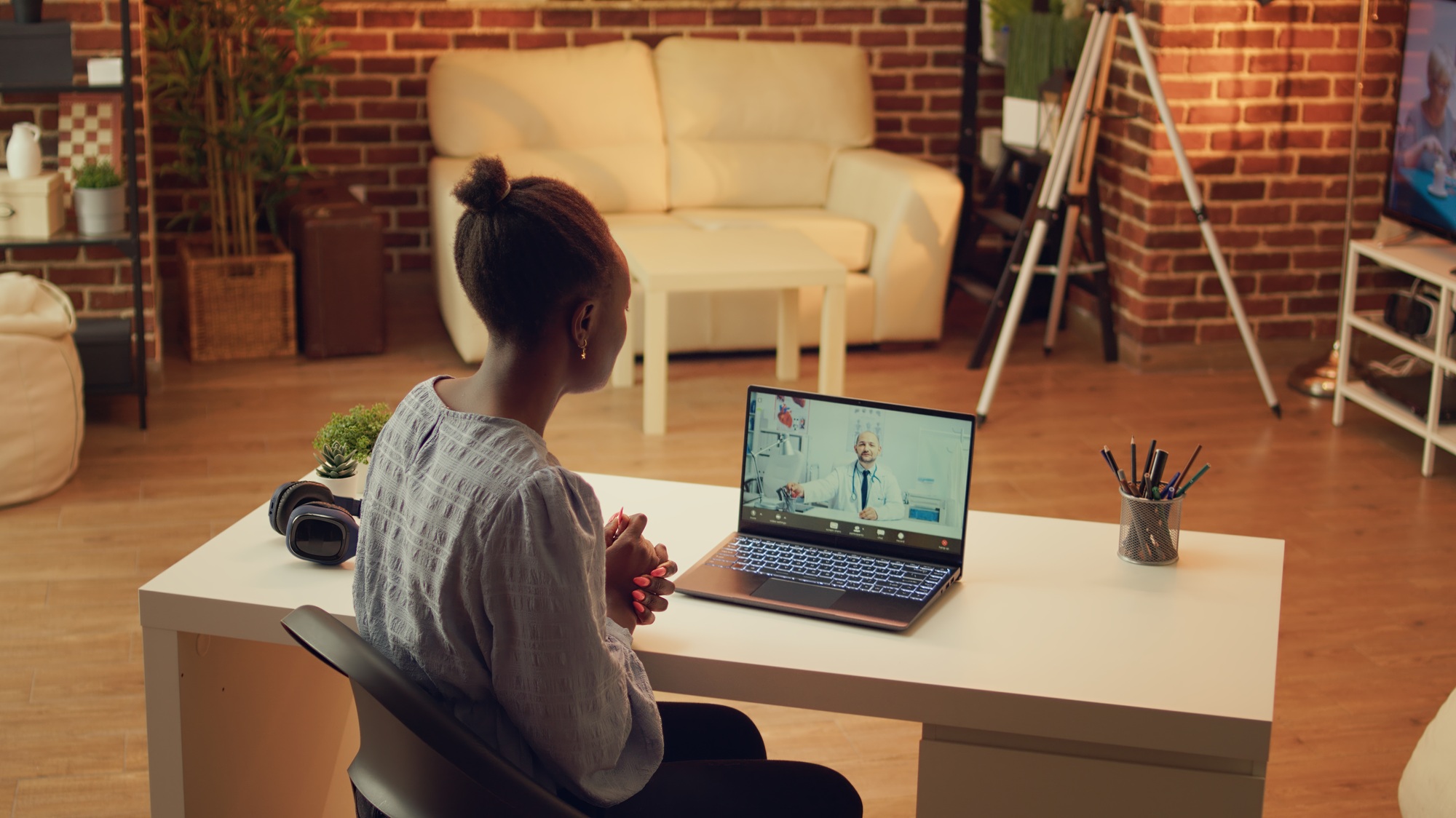
Yes. SSRIs and bupropion are not controlled substances, so they can be prescribed through standard telehealth visits without any special DEA authorization. A telehealth evaluation for SAD typically involves a structured symptom questionnaire (such as the PHQ-9 or the SPAQ), a review of your seasonal pattern history, a medication and allergy review, and a provider assessment over video. Most visits take 20 to 40 minutes.
Telehealth is appropriate for:
- New or recurring symptoms consistent with a seasonal pattern
- A previous SAD diagnosis where you are restarting a medication that worked before
- Mild to moderate symptoms that have not reached the crisis threshold
- People who find in-person mental health visits inaccessible or stigmatizing
When to seek in-person or emergency care: If you are having thoughts of self-harm, suicidal ideation, or are unable to care for yourself, please contact the 988 Suicide and Crisis Lifeline (call or text 988) or go to your nearest emergency room. Telehealth is not designed for psychiatric crisis stabilization.
An online anxiety and depression screening with a licensed Omnia provider is a low-barrier starting point if you are unsure whether what you are experiencing rises to the level of clinical SAD — our providers can help you figure that out in a single visit.
Frequently Asked Questions
Is SAD the same as regular depression? SAD is a subtype of major depressive disorder that follows a consistent seasonal pattern — most often fall-winter onset with spring remission — for at least two consecutive years. The symptoms overlap with non-seasonal depression, but the timing and the biological drivers (circadian disruption, reduced daylight) are distinct.
Can I get antidepressants for SAD through telehealth? Yes. SSRIs and bupropion — the medications most commonly used for SAD — are not controlled substances and can be prescribed by a licensed telehealth provider after a standard evaluation. The visit typically takes 20 to 40 minutes over video.
How long does it take for SAD treatment to work? Light therapy often produces noticeable improvement within one to two weeks. Antidepressants typically take two to six weeks for full effect, though some people notice changes in energy and sleep earlier. Starting treatment before your symptoms typically begin (early September or October for most people) often yields better results than waiting until you are already in a severe episode.
Does insurance cover telehealth mental health visits? Most major commercial insurance plans cover telehealth mental health visits at parity with in-person visits under the federal Mental Health Parity and Addiction Equity Act. Medicare and Medicaid coverage varies by plan and state. Your telehealth provider’s intake process will typically confirm your specific benefit.
What if light therapy and medication are not enough? A subset of people with severe or treatment-resistant SAD may benefit from a combination approach — light therapy plus medication plus CBT-SAD — or from referral to a psychiatrist. Your telehealth provider can coordinate that referral and provide records to a specialist. Transcranial magnetic stimulation (TMS) is another option for treatment-resistant depression that may be available through referral.
Every fall, millions of people write off real, treatable depression as tiredness or stress. If the pattern is recognizable — the same time of year, the same symptoms, the same drag through winter — that pattern itself is clinically meaningful and worth discussing with a provider. Schedule a same-day visit with an Omnia TeleHealth provider and get an evaluation from wherever you are, no referral needed.